

You Made a Mistake Painting Your Miniature. Here's How to Fix It, Not Redo It
4 min read
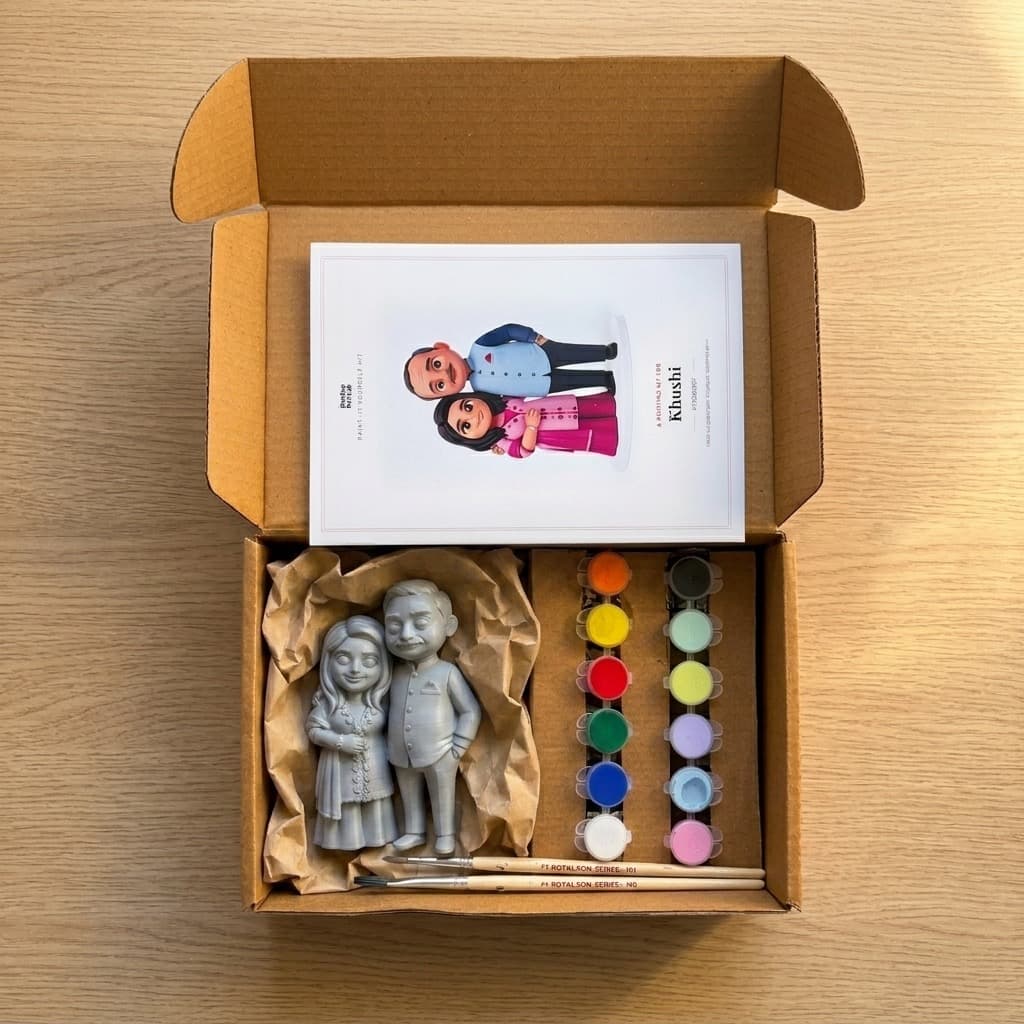
You're two hours into painting a figurine, it's finally starting to look like the reference photo, and the brush slips. Or the collar colour goes on and it's clearly the wrong shade of blue. The instinct is to assume the whole piece is ruined and you're starting again from bare grey. That's almost never true. Acrylic is opaque and forgiving in a way most people don't realise until they've tested it, and most mistakes on a miniature are a five-minute fix, not a restart.
If you catch the mistake within a minute or two, resist the urge to wipe or scrub at it. Rubbing wet acrylic spreads the smear into the areas around it, which turns a small problem into a bigger one. Let it dry fully first, usually 15 to 20 minutes on a small figurine. A dry mistake is a fixable mistake.
Once it's dry, the fix for a wrong colour or a stray line is almost always just this: paint the correct colour back over it. Acrylic layers cleanly over dry acrylic. Use a brush a size smaller than the area you're covering, load it lightly, and apply two thin coats rather than one thick one. A thick coat tends to sit slightly raised and catch the light differently from the paint around it, which is usually how a fix gets noticed months later.
Reds, oranges, and dark blues are the worst offenders. Paint white or a pale colour over a dried red mistake and a faint pink ghost can show through even two or three coats, and that's not a sign you did anything wrong; some pigments are just stronger than others. Break it with one thin neutral coat first, a light grey or off-white, directly over the trouble spot. That blocks the old undertone, so your real colour goes on clean in one or two coats instead of five.
Sometimes an entire area, a shirt, a stretch of hair, most of a face, needs repainting because the shade was wrong from the start. Outline the boundary against the neighbouring colour with a fine brush in one steady pass first, then fill the rest in with a bigger brush. Edge first, body second keeps the line clean where two colours meet, which is the part that actually shows from arm's length.
Painting over works for one bad section. It stops being worth it when there's built-up or badly textured paint across a large area, like a whole figure someone attempted years ago and gave up on. For that, a cotton swab dipped in isopropyl alcohol (70% or higher) softens and lifts dried acrylic off resin or PLA with gentle rubbing, done in small patches rather than dunking the whole piece. Slow, but it's the one case where redoing the whole surface genuinely beats fixing forward.
The one mistake that's actually hard to fix
A thick blob of dried paint sitting in a fine crevice, the corner of an eye, a fold in clothing, is the closest thing to a real problem here. Scraping it out with the edge of a hobby knife once it's fully cured, give it 24 hours, usually clears it without damaging the sculpt. Digging at it while still soft just smears it into the crevice next to it.
Working from a numbered guide makes all of this easier, since you're never trying to re-mix a colour from memory. Every pot in our kits stays numbered and matched to the guide for the whole project, so redoing a section means reaching for the same pot again, not guessing at a ratio you mixed two hours ago. See how the guides work → if you're starting a figurine and want that built in from day one.
Yes, and it's usually the whole fix. Acrylic layers cleanly over dry acrylic. Use two thin coats rather than one thick one so the fixed area doesn't sit slightly raised or read differently under light than the paint around it.
Strong pigments like red, orange, and dark blue can bleed through a lighter colour for two or three coats. Paint one thin neutral coat, grey or off-white, over the spot first to block it, then apply your real colour on top.
Only when there's heavy, chipped, or badly built-up paint across a large area, not for a single wrong section. A cotton swab with isopropyl alcohol will lift dried acrylic off resin or PLA with gentle rubbing, worked in small patches at a time.
Painting & Together-Time
A kit gives you paint and brushes. Here's the short, cheap list of everyday things you'll also want on the table before you start.
4 min read
Painting & Together-Time
The parts nobody mentions beforehand: how long it really takes, what goes wrong halfway through, and why the crooked bits end up mattering.
4 min read
Painting & Together-Time
Every kit listing claims beginner-friendly. Here's a faster way to check: match it to why you're buying it, not the packaging.
3 min read