

How to Clean and Store Acrylic Paint Brushes So They Actually Last
5 min read

The first time you paint something, the brush usually behaves fine. It's the second time that goes wrong: you pull it out of the drawer a few weeks later and the bristles have turned into a stiff little paintbrush-shaped rock, useless for anything finer than smearing glue. Acrylic paint is the reason. It rinses out easily while it's wet, but it dries into a hard plastic film within about twenty minutes, and once that's set into the bristles, no amount of soaking brings the brush all the way back.
It happens, usually after a brush gets left out overnight following a long painting session. Soak it in isopropyl alcohol or a proper brush cleaner for fifteen to twenty minutes; plain water won't touch acrylic once it's fully dried. Then work the softened paint out with your fingers under running water. It won't always come back to brand new, but a brush that looked unrecoverable often ends up fine again for base coats, even if it's lost some precision for fine detail work.
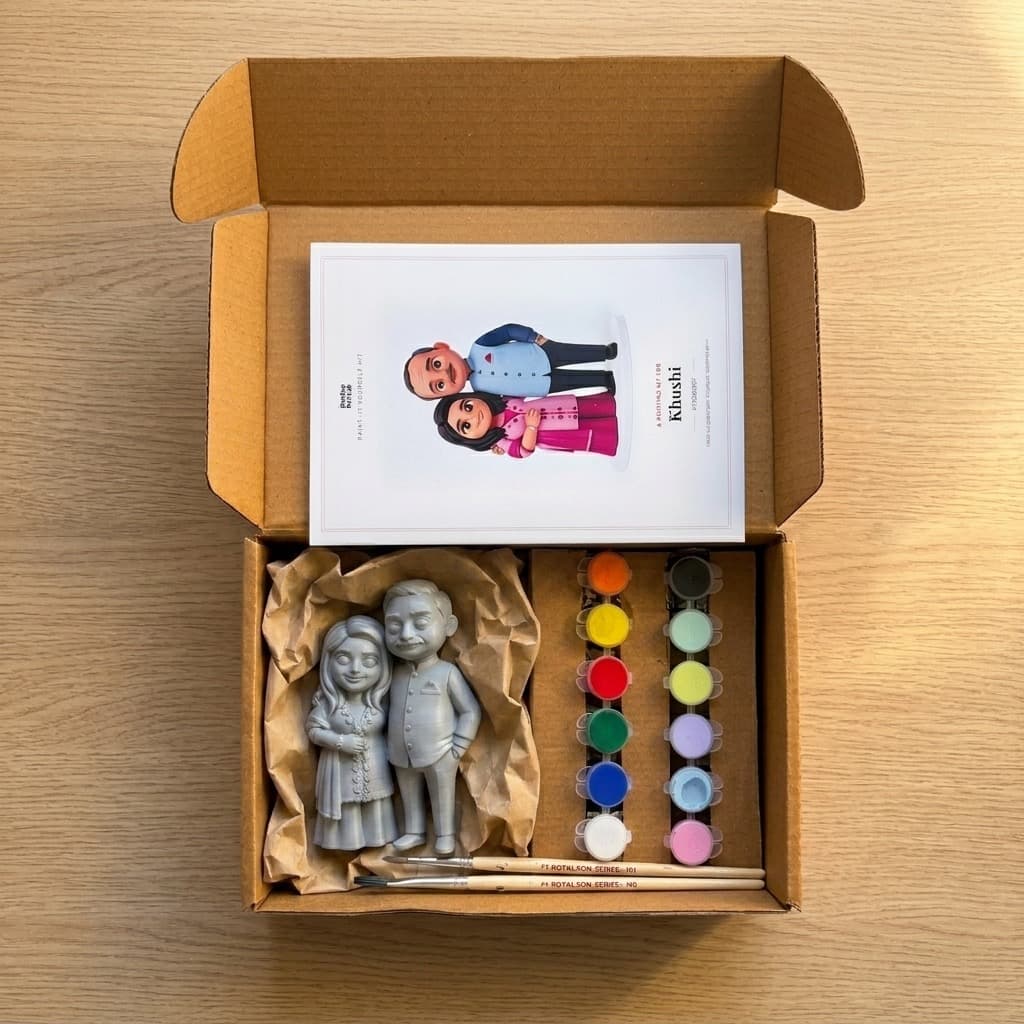
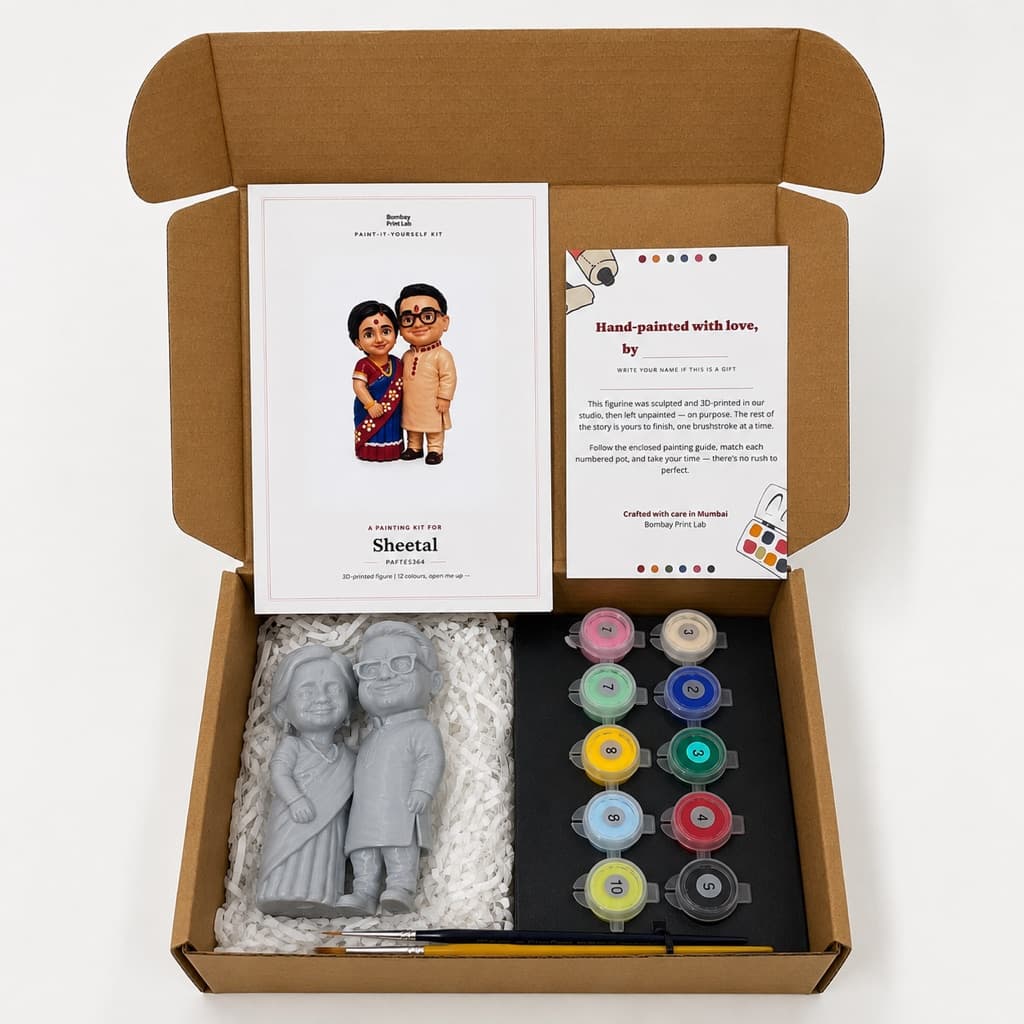
Our figurine kits ship with a couple of brushes sized for exactly this kind of work: a fine one for detail, a slightly bigger one for base coats. If you end up painting a second figurine down the line, for a sibling's rakhi or a friend's housewarming, this same routine is what keeps those two brushes ready to go rather than replaced. See how the kit works →
Before you write a brush off
A decent small brush costs somewhere around ₹100–200 at most art supply stores, so replacing one isn't a disaster. But most "ruined" brushes aren't actually ruined, they're just dried out from a day or two of being left uncleaned. Try the alcohol soak above before tossing one.
Yes, as long as the paint is still wet. A rinse and a bit of mild soap is enough. Once acrylic has fully dried in the bristles, plain water won't dissolve it and you need isopropyl alcohol or a dedicated brush cleaner to soften it back out.
Almost always because it wasn't rinsed all the way through before it dried, especially near the ferrule, where paint tends to hide. A quick surface rinse can look clean while paint still sits deeper in the bristles, and that sets hard within about twenty minutes.
Bristles-up, or flat. Standing a wet brush bristles-down in a cup lets water sit at the ferrule and loosen the glue holding the bristles in place, and it dries them into a bent shape that won't hold a point afterward.
Painting & Together-Time
A wrong colour or a smudged line on a half-painted figurine feels final. It almost never is. Here's how to actually rescue it.
4 min read

Painting & Together-Time
A kit gives you paint and brushes. Here's the short, cheap list of everyday things you'll also want on the table before you start.
4 min read
Painting & Together-Time
The parts nobody mentions beforehand: how long it really takes, what goes wrong halfway through, and why the crooked bits end up mattering.
4 min read