

Physical Kit or Online Course: Which Actually Teaches You to Paint a Miniature?
4 min read
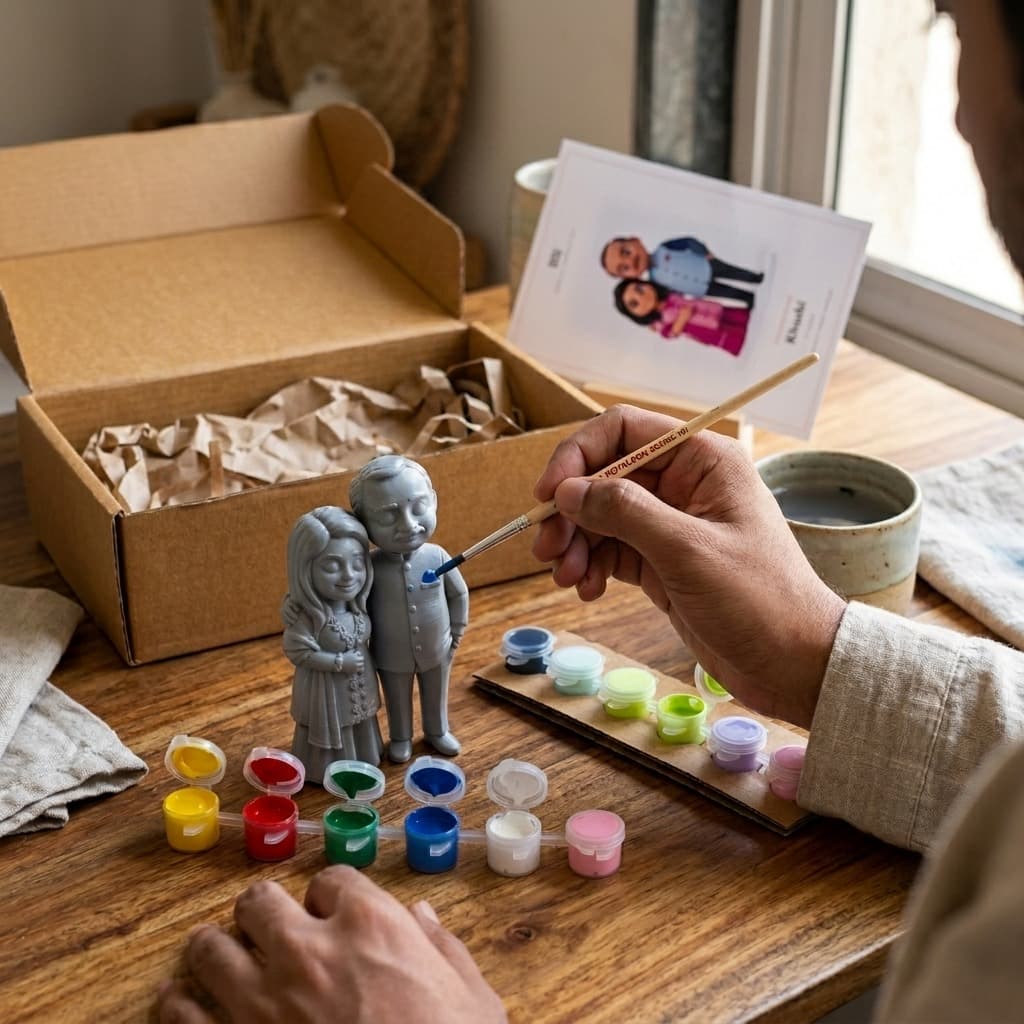
Before buying anything, a lot of first-timers go looking for an online course first, on the reasoning that they should learn the basics before touching real paint. It's a sensible instinct. It's also not quite the right question. The real choice isn't between learning and not learning, it's between two different ways of learning, and they suit different people.
A decent course, whether it's a free YouTube series or a paid one running ₹500-3,000, is genuinely good at explaining things that are hard to describe in text: how thin the paint should look on the brush, what a proper wet blend looks like mid-stroke, how someone else actually holds the brush for fine detail. Watching a technique happen in real time teaches muscle memory faster than reading about it. That's the real advantage, and it's not nothing.
The gap shows up after the video ends. Most courses teach on a generic subject, a demo miniature chosen for the lesson, not the figure sitting in front of you. You still have to work out which of your own paints match which area, in what order, before any of what you just watched applies to your actual piece. And you still need to go buy the supplies separately, which is its own small research project if you've never bought acrylic paint before.
A kit skips the translation step. The paint is already the right colour for your figure, the order is usually numbered or otherwise mapped out, and there's a real object in front of you the moment you open the box. You're not applying a lesson to a different piece later, you're just starting. That matters more than it sounds like it should, because the gap between "I watched how to do this" and "I did this on my own thing" is where a lot of first attempts stall out.
A course will still explain the why behind a technique better than any kit guide can. You can follow a numbered guide and get a genuinely good result without ever learning what a wet blend actually is, but if you want to understand the craft rather than just finish one figure, that trade-off is worth being honest about upfront.
You don't have to pick one and abandon the other. The people who get the best of both usually watch two or three short, specific videos, thinning paint and basic edge control cover most of it, rather than a full multi-hour course, and then apply it straight to a kit that's already sitting in front of them. Fifteen minutes of watching plus an actual figure to practice on beats either extreme: hours of course content with nothing to apply it to, or a kit opened cold with no idea how thick the paint should go on.
This is roughly the gap our own kits are built to close. Each figurine ships with paint pre-mixed and numbered to that exact piece, so a beginner isn't starting from a blank canvas the way most course demos assume. It won't teach you wet blending the way a video will, but it removes the part that actually stalls people, which is figuring out where to even start. If you want the technique explanation too, there's nothing stopping you from watching a short video first and then picking up the brush on your own figure.
A quick way to decide
If you learn best by watching someone else do it first, spend twenty minutes on a couple of short videos before you touch paint. If you learn by doing and figure things out as you go, skip the course and just start on a kit with a clear guide. Neither is wrong; it's about which one actually gets you to a finished figure instead of a half-watched playlist.
No. A course helps if you want to understand technique in depth, but a kit with a clear, numbered guide is enough on its own to get a genuinely good first result. Plenty of people paint their first figure with zero prior instruction and it turns out fine.
Rarely, for a first figure. Free videos cover thinning paint, basic brush control, and simple blending, which is most of what a beginner actually needs. A paid course starts to earn its cost once you're past the basics and want structured technique work across several pieces.
Pick a kit with the colours and order already worked out, watch one or two short videos on paint consistency if you want the technique explanation, and then start on the real figure. Waiting to feel fully prepared before touching paint is usually what delays people the most.
Painting & Together-Time
A wrong colour or a smudged line on a half-painted figurine feels final. It almost never is. Here's how to actually rescue it.
4 min read
Painting & Together-Time
A kit gives you paint and brushes. Here's the short, cheap list of everyday things you'll also want on the table before you start.
4 min read
Painting & Together-Time
The parts nobody mentions beforehand: how long it really takes, what goes wrong halfway through, and why the crooked bits end up mattering.
4 min read