

What's Actually Inside a Good Miniature Painting Kit
4 min read
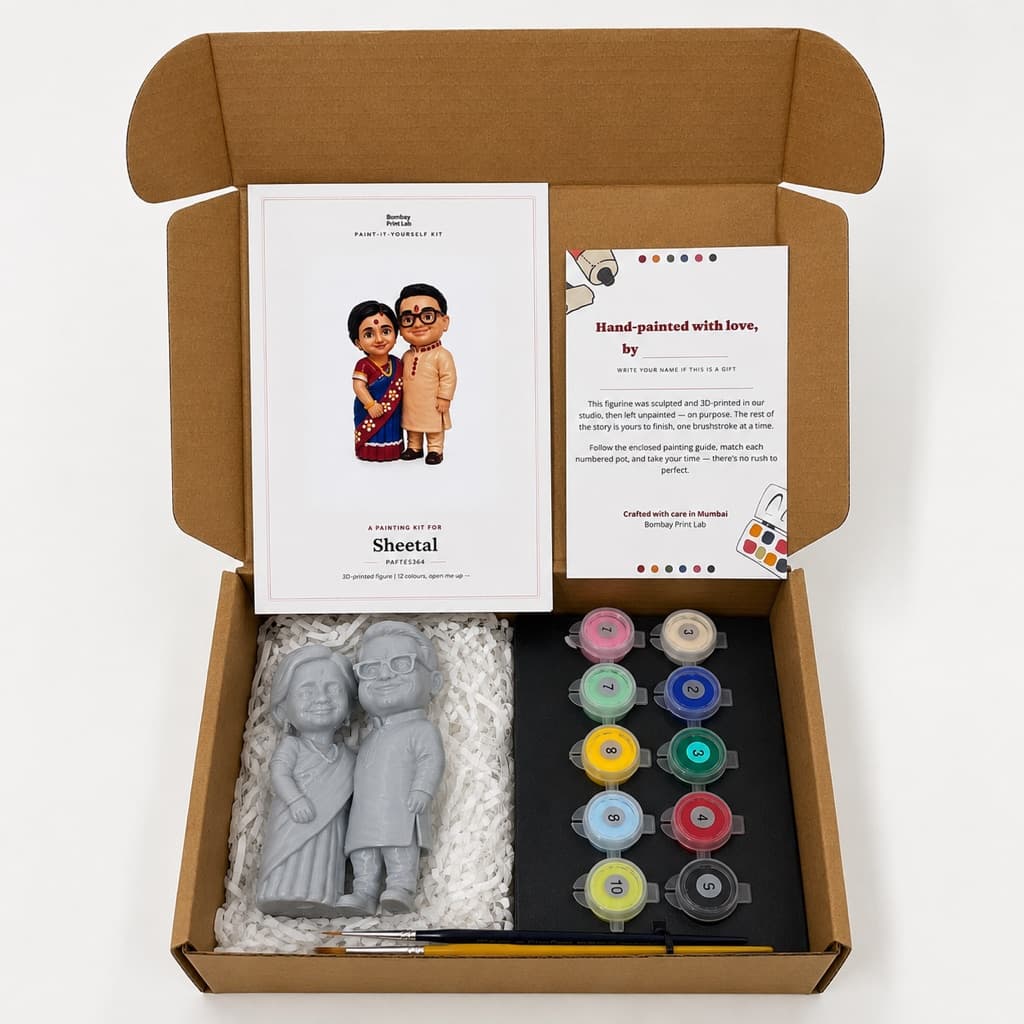
"Painting kit" gets used for two very different products. One is a proper set someone thought through: the right amount of paint, brushes that actually suit the job, some idea of what order to work in. The other is a box of ten craft-store paint pots and a single brush, called a kit because it shipped together. Both get sold at similar prices. The difference only shows up once you're sitting at the table trying to use it.
Watery, under-pigmented paint is the biggest one. It looks fine in the pot and takes four or five coats to actually cover anything, which turns a one-evening project into a weekend. A close second is a generic reference photo, the kind that shows roughly what a finished piece could look like rather than what your specific piece should look like, leaving you to guess which of the ten colours goes where. Neither of these shows up on the box. You only find out once you've opened it.
We build our own kits around this exact list, since it's the version of a kit we'd want to open ourselves: each figurine ships with paint pre-mixed and numbered to match a guide made for that specific piece, a second pot for any colour that needs the extra volume, and a varnish pot for the final coat. It's one concrete way to see the checklist above applied, not the only way to get a good kit, and the same standard is worth holding any kit to before you buy it, from us or anyone else.
Before you buy one
Count the paint pots against the colours you can actually see in the reference photo or image on the box. If there are fewer pots than obvious colours, you'll be mixing more than the listing lets on. And check whether any paint order is mentioned at all; if the listing only says "includes paint and brushes" with nothing about sequence, assume there isn't one.
Enough to cover the visible colours in the reference photo without heavy mixing, usually somewhere between six and twelve for a single figure. Fewer than that and you'll be mixing shades yourself; a lot more than that and several pots likely go untouched.
No. One brush forces the same tip to handle both fine detail and large areas, which makes both harder than they need to be. Two brushes, a small round for detail and a slightly larger one for big areas, covers almost every figure.
Only if the figure is raw resin or PLA that paint won't stick to on its own. A kit that already handles this, or clearly says the piece is pre-primed, saves you a separate step and a separate purchase.
Painting & Together-Time
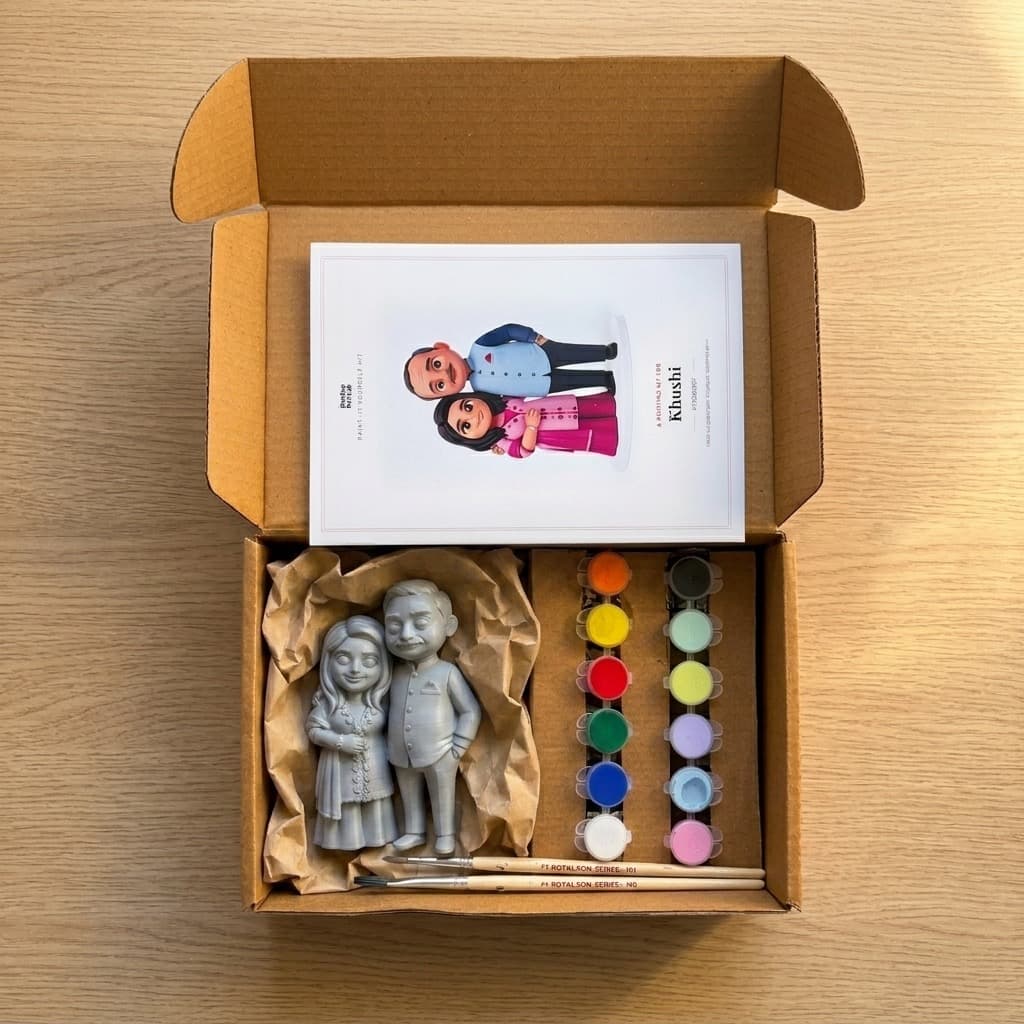
A wrong colour or a smudged line on a half-painted figurine feels final. It almost never is. Here's how to actually rescue it.
4 min read
Painting & Together-Time
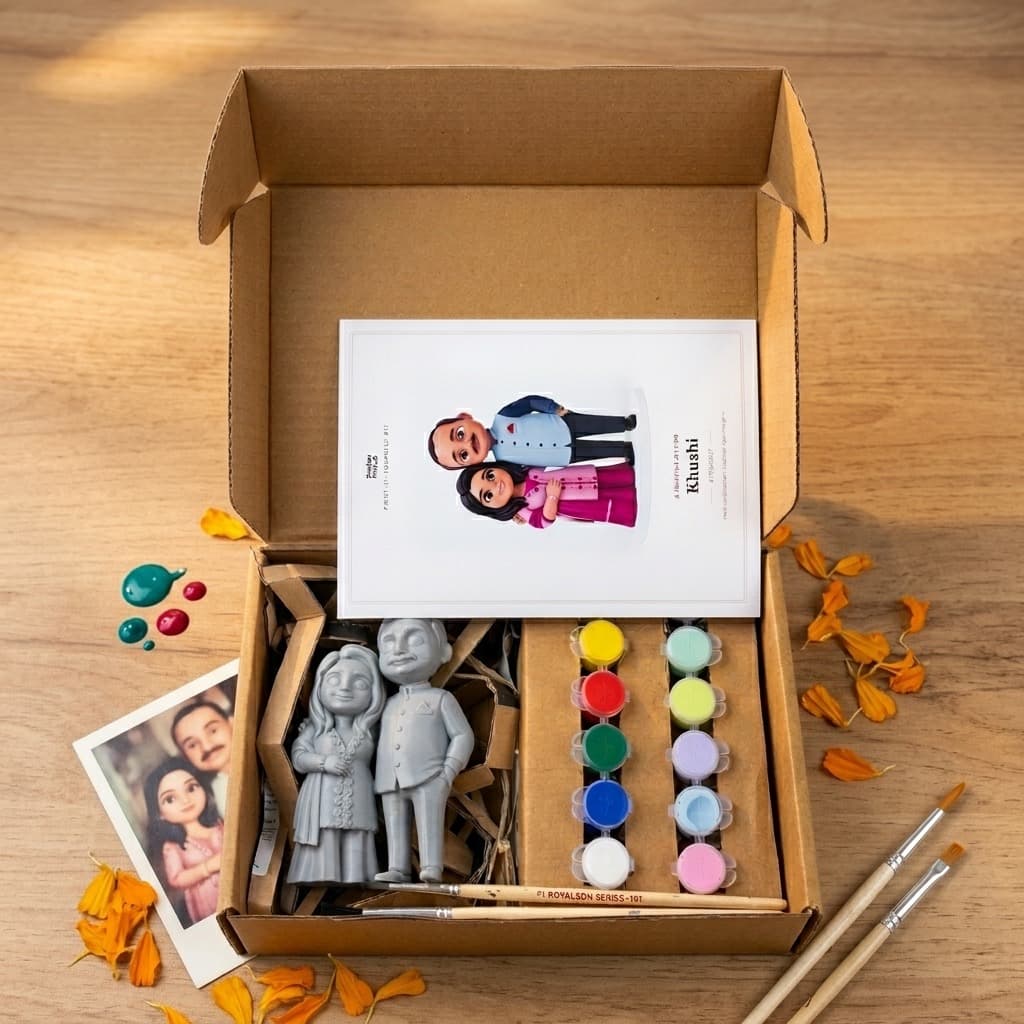
A kit gives you paint and brushes. Here's the short, cheap list of everyday things you'll also want on the table before you start.
4 min read
Painting & Together-Time
The parts nobody mentions beforehand: how long it really takes, what goes wrong halfway through, and why the crooked bits end up mattering.
4 min read