

Acrylic, Watercolour, or Gouache: What to Actually Buy as a First-Timer
4 min read
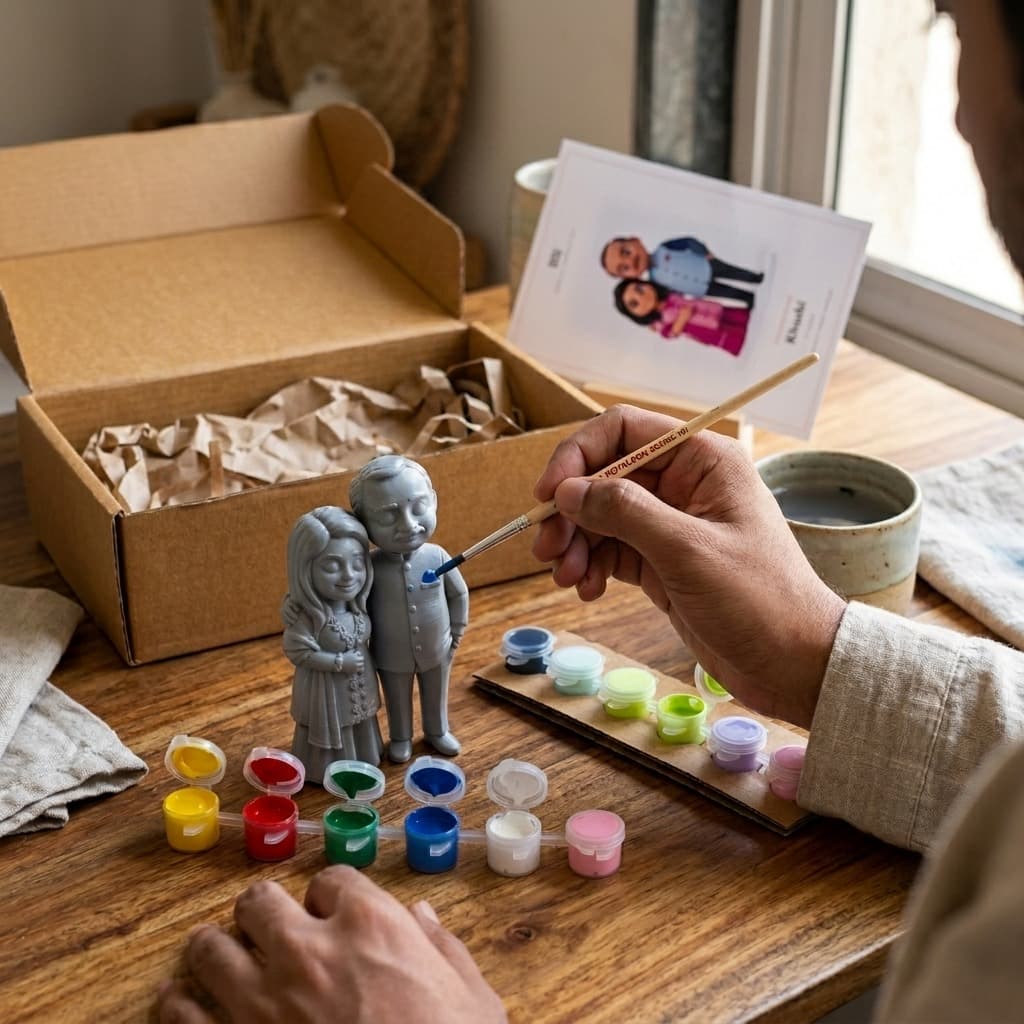
The paint aisle is where a lot of first projects stall before they even start. Acrylic, watercolour, gouache, poster colour, sometimes all four sitting on the same shelf claiming to do roughly the same job. They don't. Each one behaves differently on a brush, dries differently, and suits a different surface, and picking the wrong one is the fastest way to get a wonky result and blame your own hand instead of the paint.
Buy acrylic. It's the most forgiving option for someone starting from zero, it's sold everywhere in India at every budget, and it works on nearly any surface a beginner actually paints: canvas, wood, terracotta, resin, or an unpainted figurine. A student set of 10–12 colours (Camlin or Fevicryl are the usual first buy) costs ₹150–350 and is genuinely enough to finish a full project.
Watercolour is transparent by nature, so every layer lets the one underneath show through. That's exactly what makes it good for soft washes, skies, and paper-based work like greeting cards or journaling, and exactly why it's the wrong pick for a 3D object: it can't hide a base colour, so a grey figurine painted in watercolour still looks grey. A beginner pan set runs ₹100–300 (Camlin, Faber-Castell), but it's also the least forgiving of the three. Colours lift and bleed into each other if you go back over a wet area, so mistakes are harder to paint out than with acrylic.
Gouache sits between the two. It's opaque, like acrylic, but it doesn't fully seal once dry: add water days later and it reactivates, which is handy for illustration work you want to keep adjusting and a problem for anything that'll get touched or handled once finished, like a figurine on a shelf. In India, poster colour (Camel and similar, ₹80–150) is the budget cousin of gouache and probably what you already used in school. Proper gouache, from brands like Winsor & Newton or the newer jelly-pot versions, runs ₹600–1500 and has a noticeably richer, more velvety finish for flat illustration on paper.
Acrylic is really the only sensible option once the surface isn't flat paper. It's why our own figurine kits ship with acrylic paint pots pre-matched to your figure's colours rather than watercolour or gouache: it's the one paint that covers a printed resin surface fully and then holds up to being touched, packed, and displayed for years afterward. If you've already got acrylic sitting at home from a past project, it works here too; you don't need a special kind bought specifically for figurines. We've covered the actual painting side, what order to paint in and how to fix the common first-timer mistakes, once the paint itself is sorted.
What to actually buy, if you're starting acrylic from zero
A 10–12 colour student acrylic set, one small round brush (size 0–2) for detail, one medium flat or round brush for bigger areas, an old plate for mixing, and a cup of water. That's the whole list. Anything more is optional until you find out what you're actually missing.
Not really. Watercolour is transparent, so it won't cover a grey or white base surface, and it doesn't hold up to handling the way acrylic does. Save watercolour for paper-based projects and use acrylic for anything 3D.
Close, not identical. Poster colour is a cheaper, less pigmented version of the same idea: opaque and reactivatable with water. It's what most people already have from school. Proper gouache costs more but gives a richer, more even finish.
You can use them on the same piece for different sections, but avoid mixing them together in the same puddle. They don't behave the same way once dry, and the mix won't hold consistently.
Painting & Together-Time
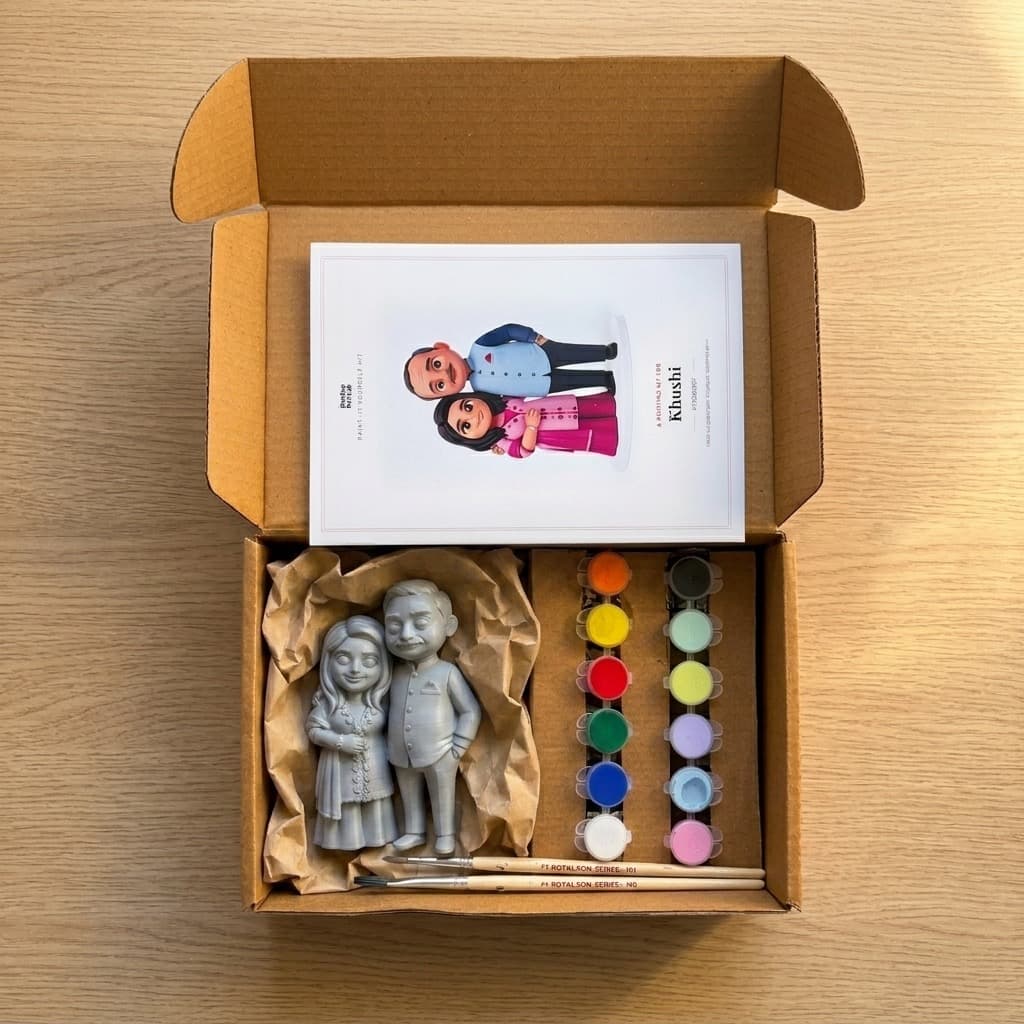
A wrong colour or a smudged line on a half-painted figurine feels final. It almost never is. Here's how to actually rescue it.
4 min read
Painting & Together-Time
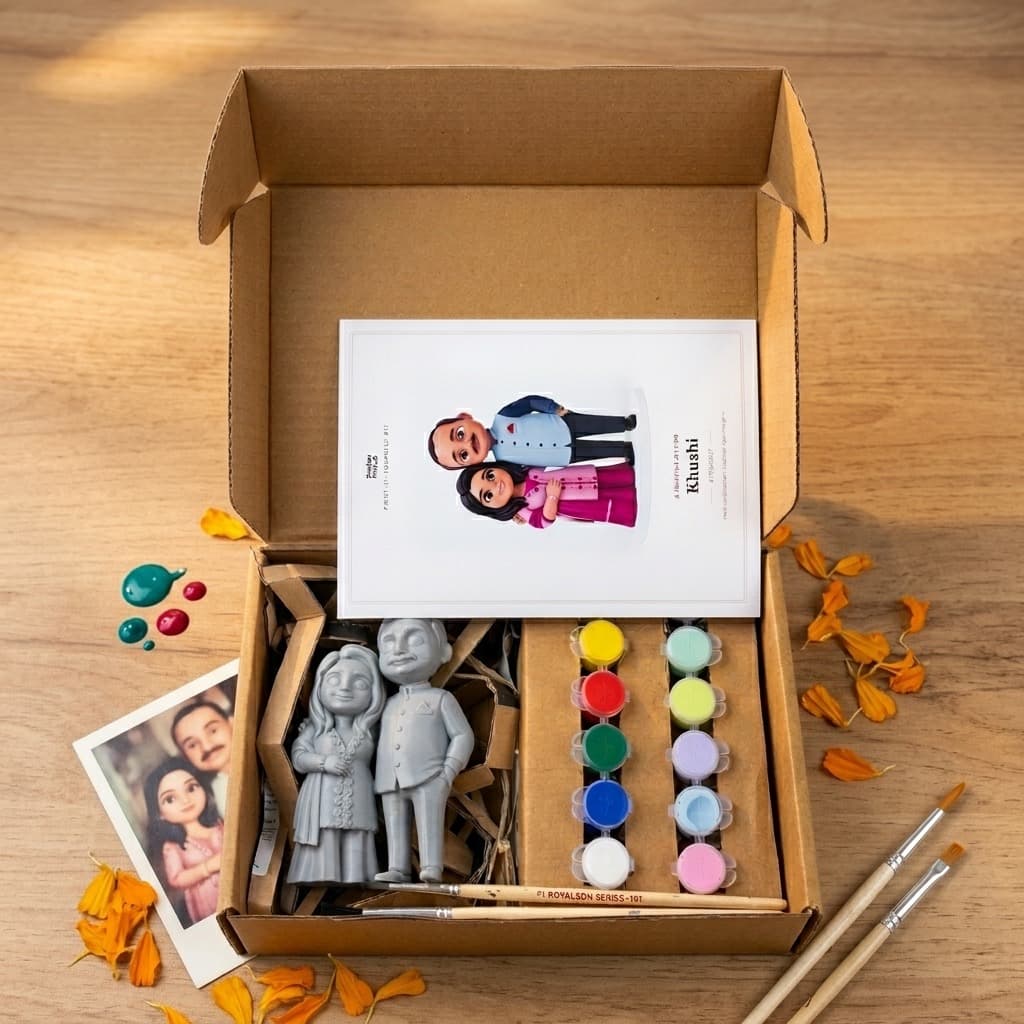
A kit gives you paint and brushes. Here's the short, cheap list of everyday things you'll also want on the table before you start.
4 min read
Painting & Together-Time
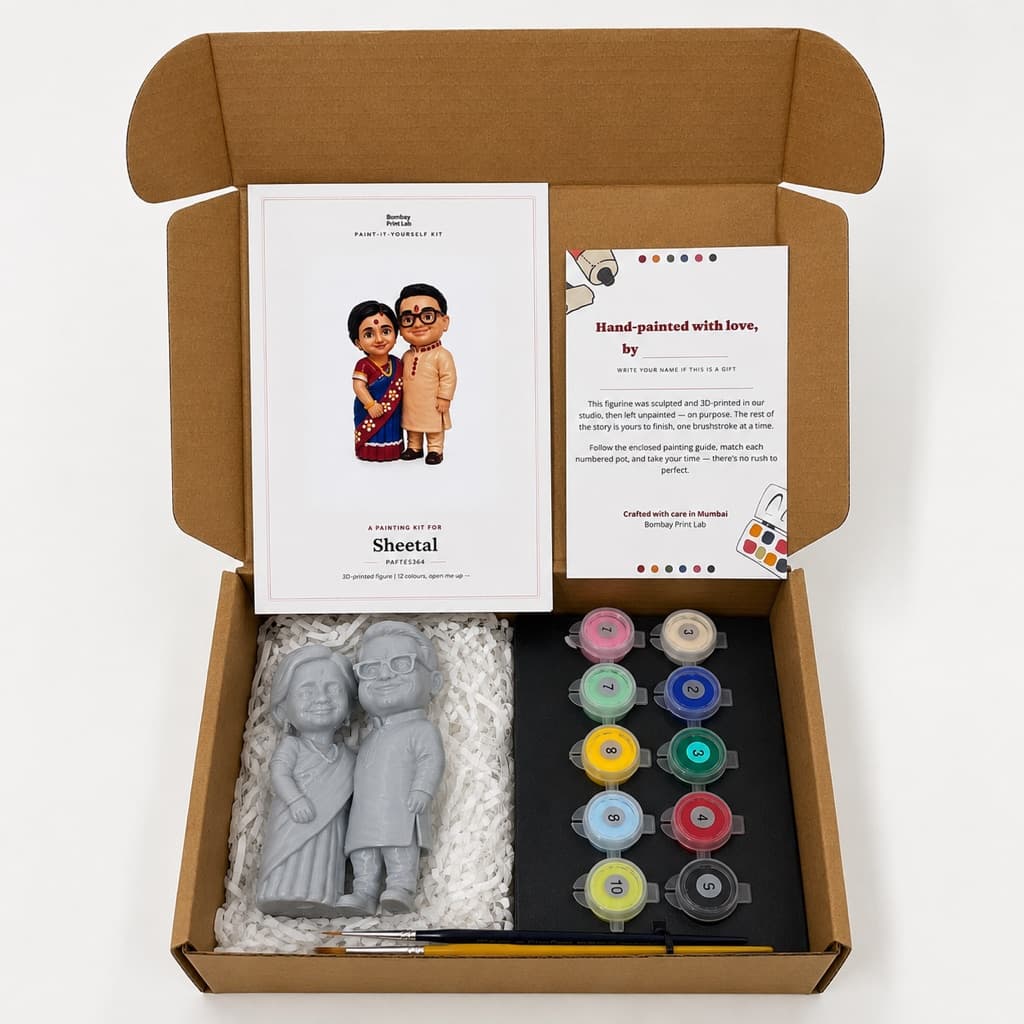
The parts nobody mentions beforehand: how long it really takes, what goes wrong halfway through, and why the crooked bits end up mattering.
4 min read