

Can You Actually Make Money Painting Miniatures?
4 min read
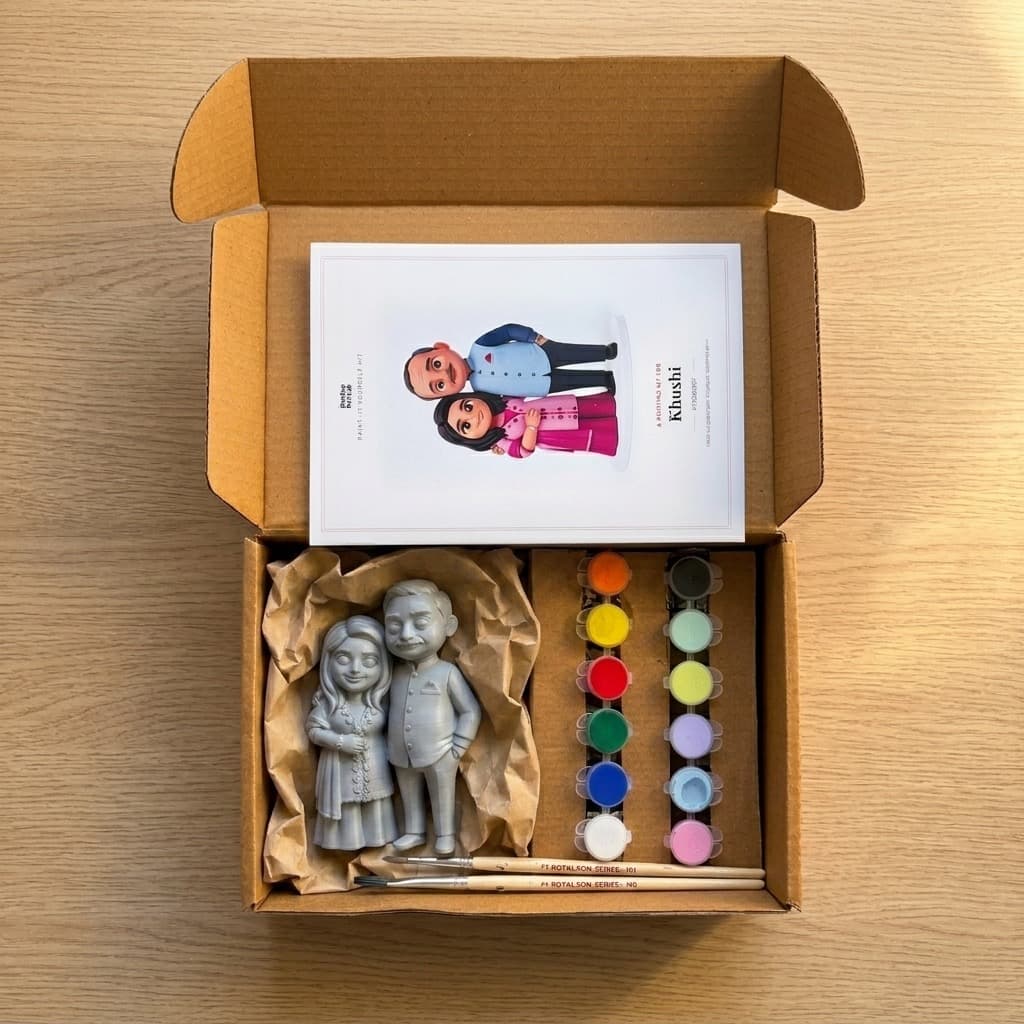
A friend sees the figurine you painted, likes it more than they expected to, and asks if you'd paint one for them too, for money. That's usually how this starts. Before you set up an Instagram page and a price list, it's worth being honest about what commission painting actually pays in India, because the numbers are quieter than they sound in your head.
Prices vary by size and finish, but for a single hand-painted figurine, expect somewhere between ₹800 and ₹2,500. A simple flat-colour job on a small piece sits at the low end. Real shading, blended skin tones, or a face that needed genuine attention pushes it toward the top. Anyone quoting ₹5,000+ for one small piece is either painting at a properly professional level or setting an expectation they can't back up yet.
A careful beginner-to-intermediate painter takes three to five hours to do a figure justice, longer if the face needs real work. At ₹1,200 for the piece, that's roughly ₹250-350 an hour before you count materials, which usually run ₹50-150 in paint per figure. That's not a wage. It's decent pocket money for time you were probably going to spend on the hobby anyway. The rate only improves once you're fast enough to finish a comparable piece in ninety minutes, and that speed comes from doing dozens of them, not from charging more per hour on the tenth one.
Nobody finds a stranger's commission painter cold. The first handful of paying jobs come from people who've already seen your work in person or in photos.
Practice on something that costs nothing to get wrong
Your first paid piece shouldn't also be your first real attempt at a tricky face. Get those mistakes out of the way on a blank figurine of your own first. One that already comes with a numbered guide takes the colour-matching guesswork out, so you can focus purely on brush control. We make figurines built for exactly that, a photo turned into an unpainted piece with numbered paint pots, though any primed miniature with clear reference photos works the same way. Most beginner slip-ups have a simple fix regardless, and it's better to find that out on your own supply than a client's.
As a side income, genuinely yes, for the right person. Eight to twelve pieces a month around a day job puts you somewhere in the ₹4,000-8,000 range once you've built a small repeat client base, which is real money for time you'd likely spend on the hobby regardless. It stops being worth doing the moment you start resenting the hobby that got you here, or pricing so low out of anxiety about losing a client that you're effectively working for free. How long a single figure actually takes is worth knowing cold before you quote anyone, because underestimating your own time is the fastest way to end up doing this for less than it's worth.
Price it near your material cost for the first one or two, mainly to get real before-and-after photos and someone willing to vouch for the work. Once you have two or three finished pieces to point to, move up toward the ₹800-1,500 range depending on size and detail, rather than staying at cost indefinitely.
No. There's no licensing involved for small craft work like this. What actually gets you paid is a handful of clear photos of finished pieces and a couple of people willing to recommend you, not a certificate.
Painting & Together-Time
A wrong colour or a smudged line on a half-painted figurine feels final. It almost never is. Here's how to actually rescue it.
4 min read
Painting & Together-Time
A kit gives you paint and brushes. Here's the short, cheap list of everyday things you'll also want on the table before you start.
4 min read
Painting & Together-Time
The parts nobody mentions beforehand: how long it really takes, what goes wrong halfway through, and why the crooked bits end up mattering.
4 min read