

Can You Paint a Miniature With Regular Craft Paint?
4 min read
You've got a half-used bottle of craft paint sitting in a drawer from some fabric-painting project three years ago, and you're wondering if it'll do for a miniature. Short answer: yes, mostly, but not straight out of the bottle the way you'd use it on a t-shirt. The gap between 'this paint exists' and 'this paint works on a 6-inch figure' is where most first attempts go wrong.
In India this usually means the ₹20–40 bottles sold for glass painting, fabric, terracotta pots and general school projects (Fevicryl's craft range, Camel's multi-surface bottles, that sort of thing). It's acrylic, technically the same paint family as what we recommend for figurines, but formulated to be thin and flow easily across large flat surfaces like cloth or glass. That's the whole design brief: spread easily, dry fast, work on many surfaces at once. Nobody built it to survive a 2mm brush tip on a figure's face.
Thin it. Add water a few drops at a time until it moves like milk rather than like ketchup, and build colour in two or three thin layers instead of one thick one. This does two things at once: it lets the paint follow the sculpted detail instead of drowning it, and it evens out whatever inconsistency is in that particular bottle. Keep the craft paint for base coats and big flat areas, and if you can, borrow or buy one proper small brush (size 0–1) for the face and hands regardless of which paint you're using. A cheap paint with a good brush beats a good paint with a bad one almost every time.
The honest verdict
Craft paint won't ruin a miniature. It'll just make you work harder for a result that a purpose-made acrylic set gets in fewer coats. Fine for a first practice run or a large flat area, worth upgrading to a proper set once you're painting something you actually plan to keep.
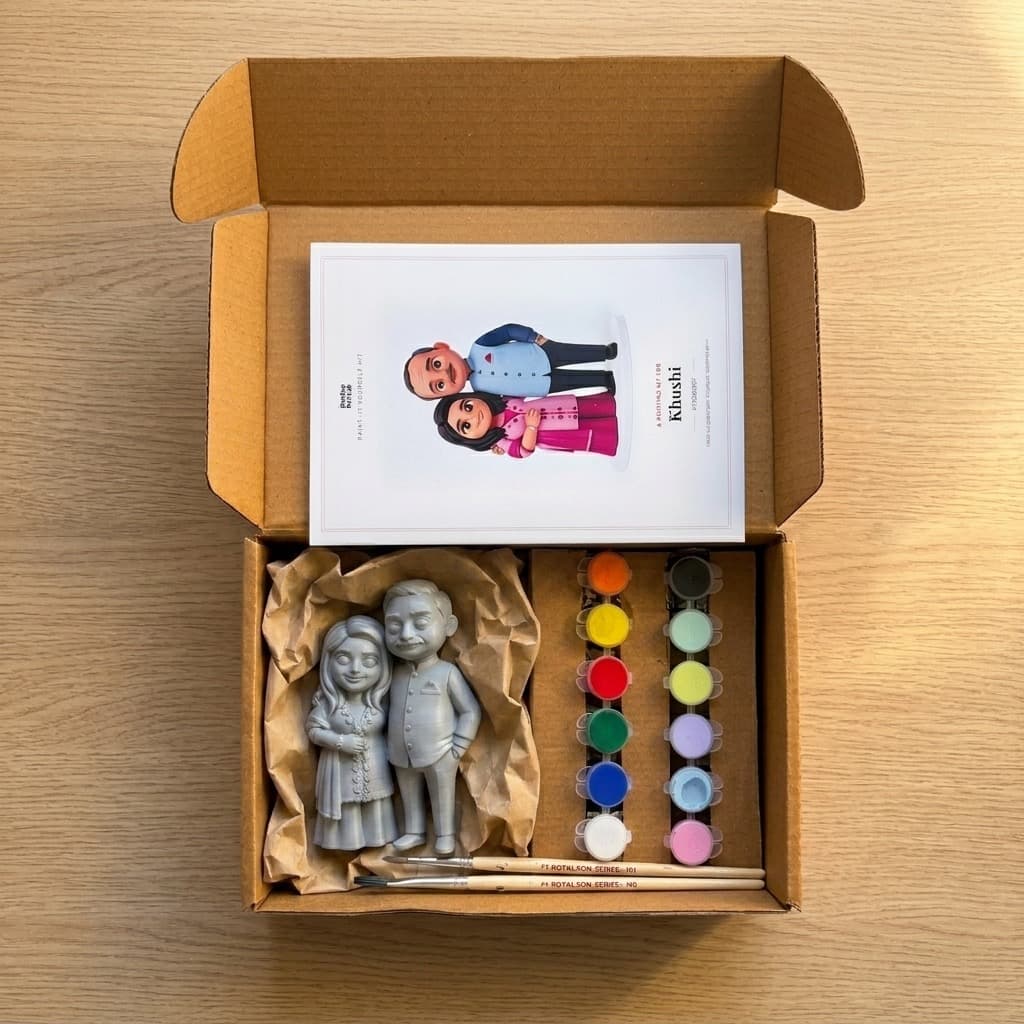
We touched on the medium question more broadly in acrylic vs. watercolour vs. gouache, which is the one to read if you're buying paint from scratch rather than digging through a drawer. Every figurine we make at Bombay Print Lab ships with acrylic already thinned and pre-matched to your figure's colours in numbered pots, so if this whole question is putting you off starting, that part's handled before it reaches you.
Yes, chemically it's still acrylic. The difference is formulation: craft paint is thinned and pigmented for covering large surfaces like fabric or glass cheaply, not for opaque coverage in one or two coats on a small detailed figure.
It can, especially on primed resin or plastic, more so than a proper student or hobby acrylic. A thin clear varnish coat once you're done painting reduces the risk noticeably.
It's a good idea either way, but more so with craft paint. A matte or gloss varnish protects the thinner pigment layer from scuffing when the piece gets picked up or moved around a shelf.
Painting & Together-Time
A wrong colour or a smudged line on a half-painted figurine feels final. It almost never is. Here's how to actually rescue it.
4 min read

Painting & Together-Time
A kit gives you paint and brushes. Here's the short, cheap list of everyday things you'll also want on the table before you start.
4 min read
Painting & Together-Time
The parts nobody mentions beforehand: how long it really takes, what goes wrong halfway through, and why the crooked bits end up mattering.
4 min read