

What Turns a Blank Miniature Into a Keepsake, Not Just a Finished Craft
4 min read
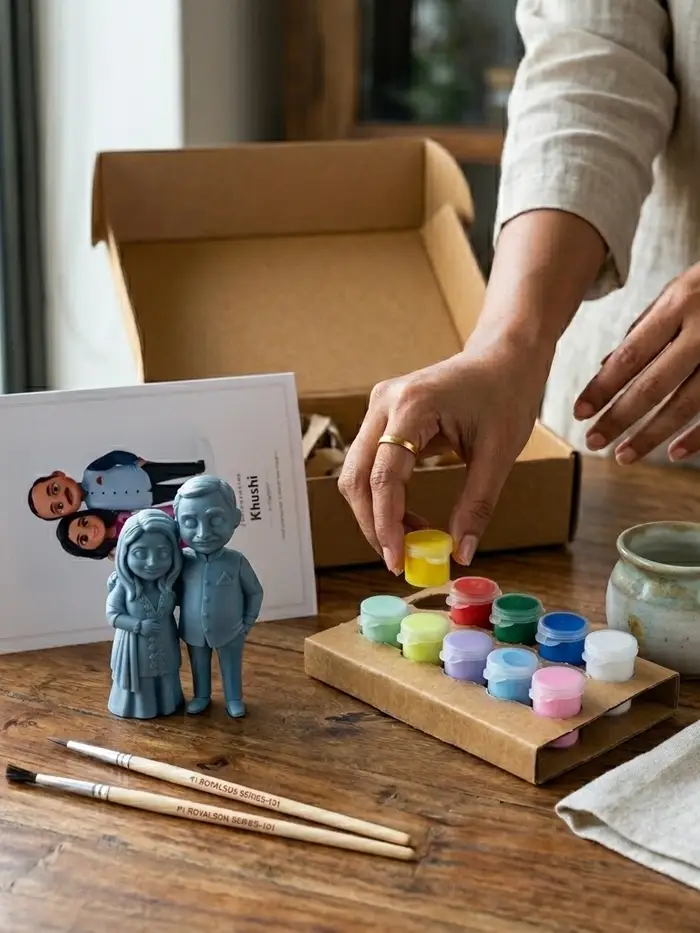
Open most Indian homes' craft drawers and you'll find at least one half-finished thing in there: a candle kit with three colours poured and two still in their sachets, a canvas bought for a paint-and-sip evening that never happened, a cross-stitch kept 'for later.' A miniature figurine can end up exactly the same way, grey on one side and coloured on the other, forgotten by the second weekend. Or it can end up as something you actually keep, finished, on a shelf for years. The difference isn't skill. It's a handful of decisions made before you even open the box.
Three things tend to decide it, and none of them are about how steady your hand is with a brush.
If you're buying a blank miniature purely to try the hobby, that's a fine reason on its own, just be honest that it's more likely to end up half-painted, because there's genuinely nothing riding on finishing it. If the point is a keepsake, work backwards from the memory first: whose figure is this, and where is it going to sit once it's done. That answer changes how careful you are with the brush, and it's usually what gets people back to the table on day two instead of leaving it on day one.
A figurine kit with a numbered guide (ours works this way, though it's not the only kind that does) has a built-in advantage here: you know exactly how many colours you're painting and roughly how long it'll take, usually two to four hours spread across one or two sittings (more on realistic timing here). That's a completely different commitment from 'learn miniature painting,' which has no finish line at all. Treat the first figure as a fixed, bounded project rather than the start of a hobby, and finishing it stops being a big ask.
If it's been sitting half-painted for a while
Don't start over. Pick it back up where you left off; paint that's already dry doesn't need redoing, only what's still bare. The guide it shipped with, or the reference photo if you're improvising, still tells you what goes where months later. If a section came out uneven the first time round, here's how to fix the common mistakes without repainting the whole piece.
It holds up when the subject means something to you: your dog, your partner, a version of a moment you'd otherwise only have as a photo. Those get finished and kept. A generic hobby figure with no personal subject is a lot easier to leave half-painted in a drawer.
That's normal, and not really a flaw in you. Keep it somewhere you'll actually see it rather than in a drawer, so 'finish this' stays visible, and pick it up for one sitting rather than trying to plan a whole weekend around it. Most half-finished figures get done in under an hour once someone actually sits back down with them.
No. The pieces people keep for years are rarely the technically perfect ones; they're the ones with an actual person or pet behind them. A slightly uneven paint job on a figure of your kid means more on a shelf than a flawless one of nothing in particular.
Painting & Together-Time
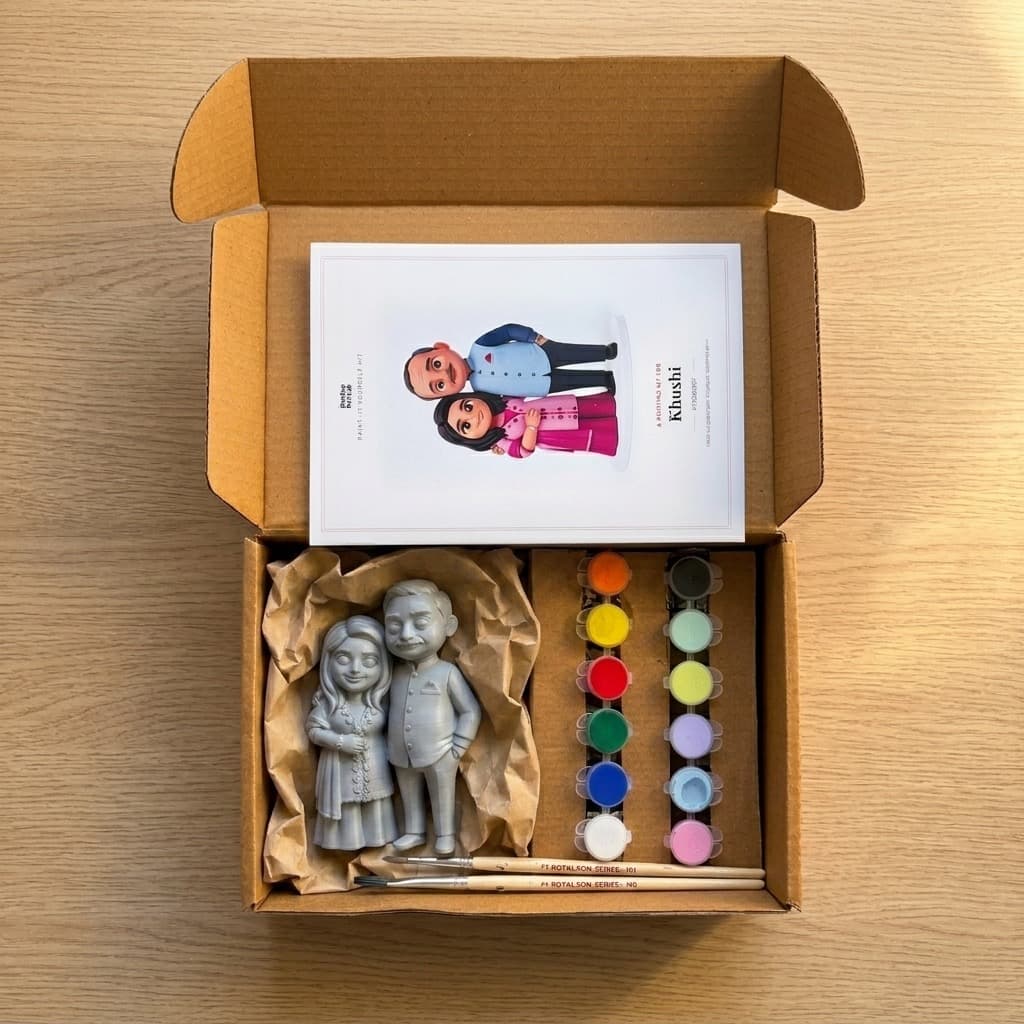
A wrong colour or a smudged line on a half-painted figurine feels final. It almost never is. Here's how to actually rescue it.
4 min read
Painting & Together-Time
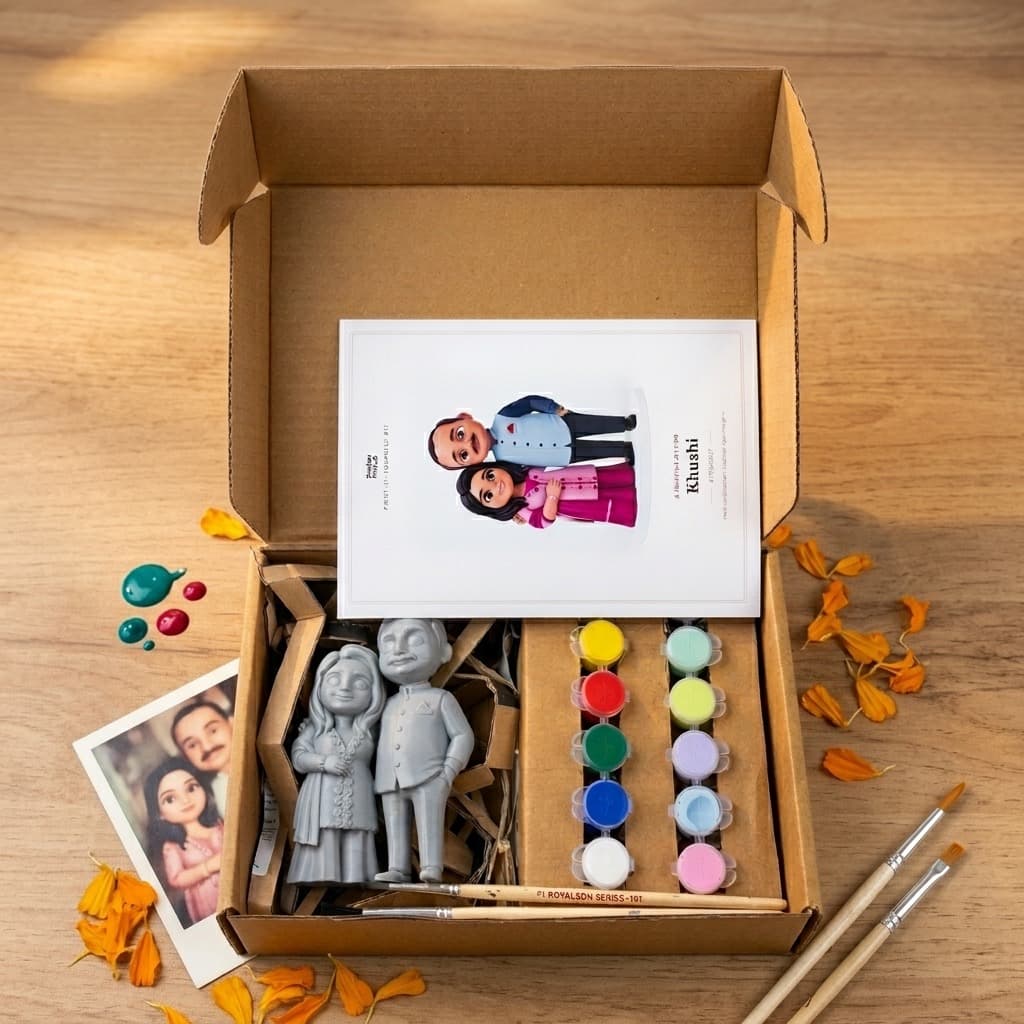
A kit gives you paint and brushes. Here's the short, cheap list of everyday things you'll also want on the table before you start.
4 min read
Painting & Together-Time
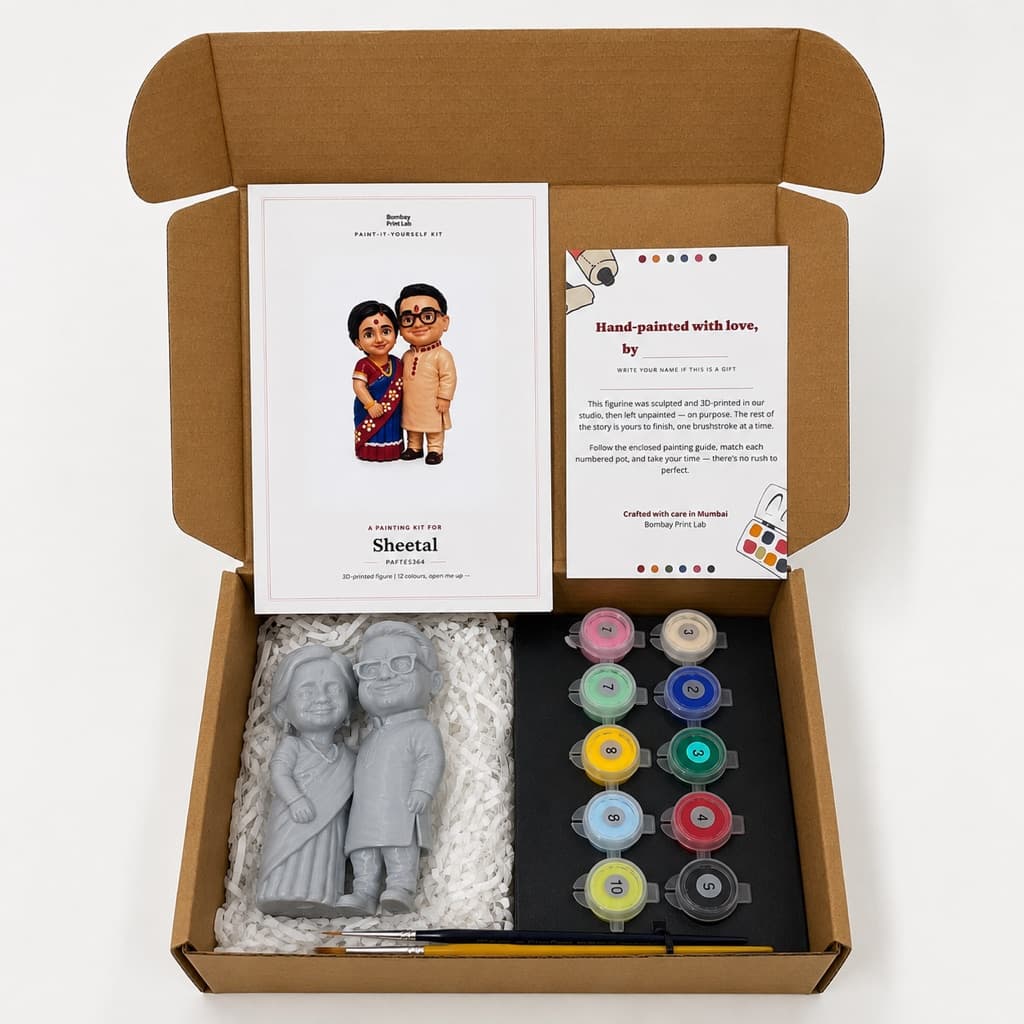
The parts nobody mentions beforehand: how long it really takes, what goes wrong halfway through, and why the crooked bits end up mattering.
4 min read