

Where to Buy a Miniature Painting Kit in India (And What to Check First)
4 min read
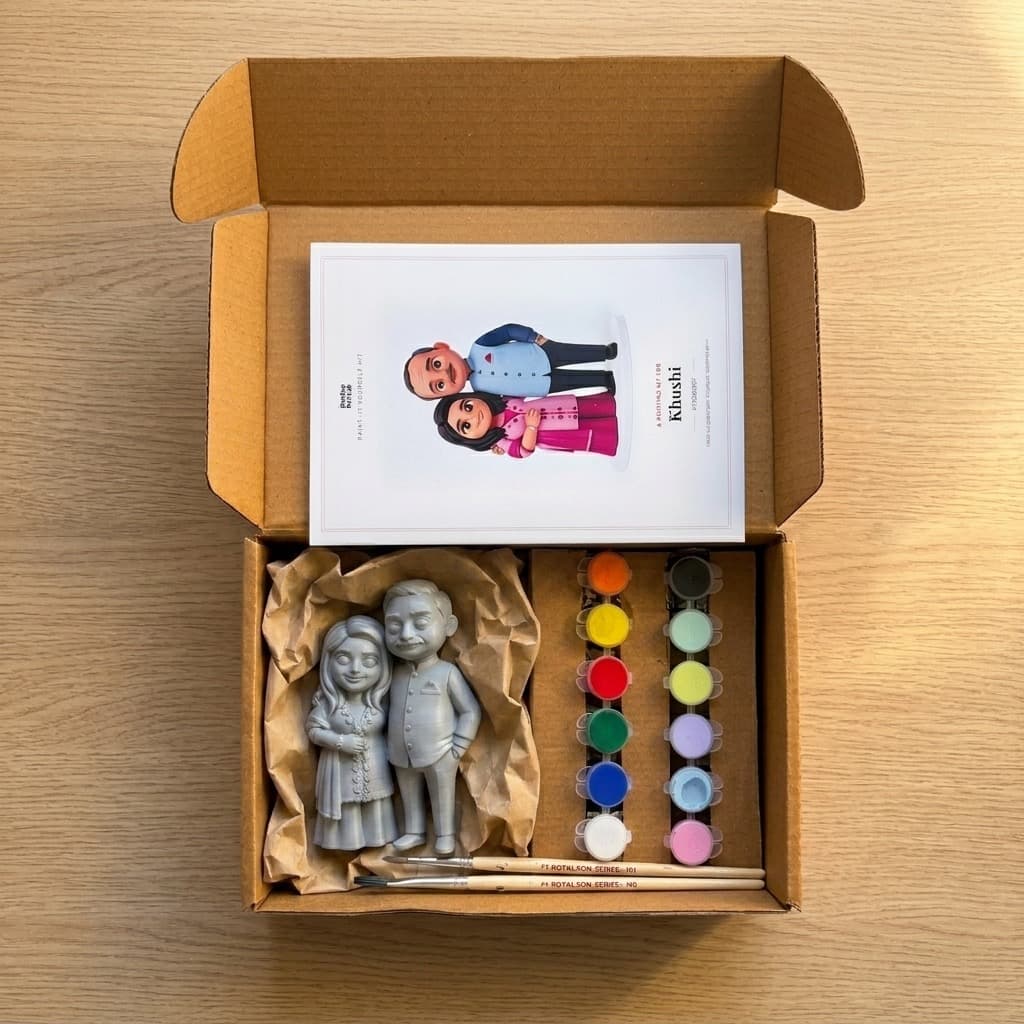
Search "miniature painting kit" on any marketplace and you'll get a wall of listings that all look roughly the same: a grid of paint pots, a couple of brushes, a stock photo of a finished figure that may or may not resemble what actually ships. Star ratings don't help much either, since a kit with a dried-out third pot can still sit at 4.3 stars if enough people never got around to using it. This is a short guide to sorting through that, not a ranked list of specific sellers.
We wrote a longer breakdown of what separates a kit worth buying from one that ends up half-used in a drawer in what's actually inside a good miniature painting kit, if you want the fuller checklist once you've narrowed down a listing or two.
A lot of this search gets easier the moment you're not shopping for a generic kit at all. If what you actually want is a figurine of a specific photo, painted by you, a kit built for that one piece skips most of the checklist above: there's no reference-photo mismatch to catch, because the guide is made for that exact figure. We build ours this way, paint pre-matched and numbered to the piece it ships with, mainly because it's the version of this problem we kept running into ourselves before we started making them.
Before you click buy
Zoom into the listing photos as far as they'll go. A real photo holds up under zoom; a rendered mockup starts looking flat or slightly plastic-y past a certain point. Takes ten seconds and catches more fake listings than reading the description ever will.
Big marketplaces are safer for returns if something arrives damaged. Small direct sellers are usually the better bet if you want the kit matched to a specific figure rather than a generic colour set. Neither is universally safer; it depends what you're buying it for.
Zoom in as far as the image allows. Real photos hold detail; rendered mockups tend to look flat or slightly artificial once you're past normal zoom. Also check whether any review includes a photo of the actual received kit.
Assuming the pot count matches the colours in the photo without checking. Counting the visible colours in the reference image against the number of pots listed takes a minute and avoids a kit that leaves you mixing shades you didn't expect to.
Painting & Together-Time
A wrong colour or a smudged line on a half-painted figurine feels final. It almost never is. Here's how to actually rescue it.
4 min read
Painting & Together-Time
A kit gives you paint and brushes. Here's the short, cheap list of everyday things you'll also want on the table before you start.
4 min read
Painting & Together-Time
The parts nobody mentions beforehand: how long it really takes, what goes wrong halfway through, and why the crooked bits end up mattering.
4 min read