

What Brushes Should Actually Be in a Beginner Miniature Painting Kit
4 min read
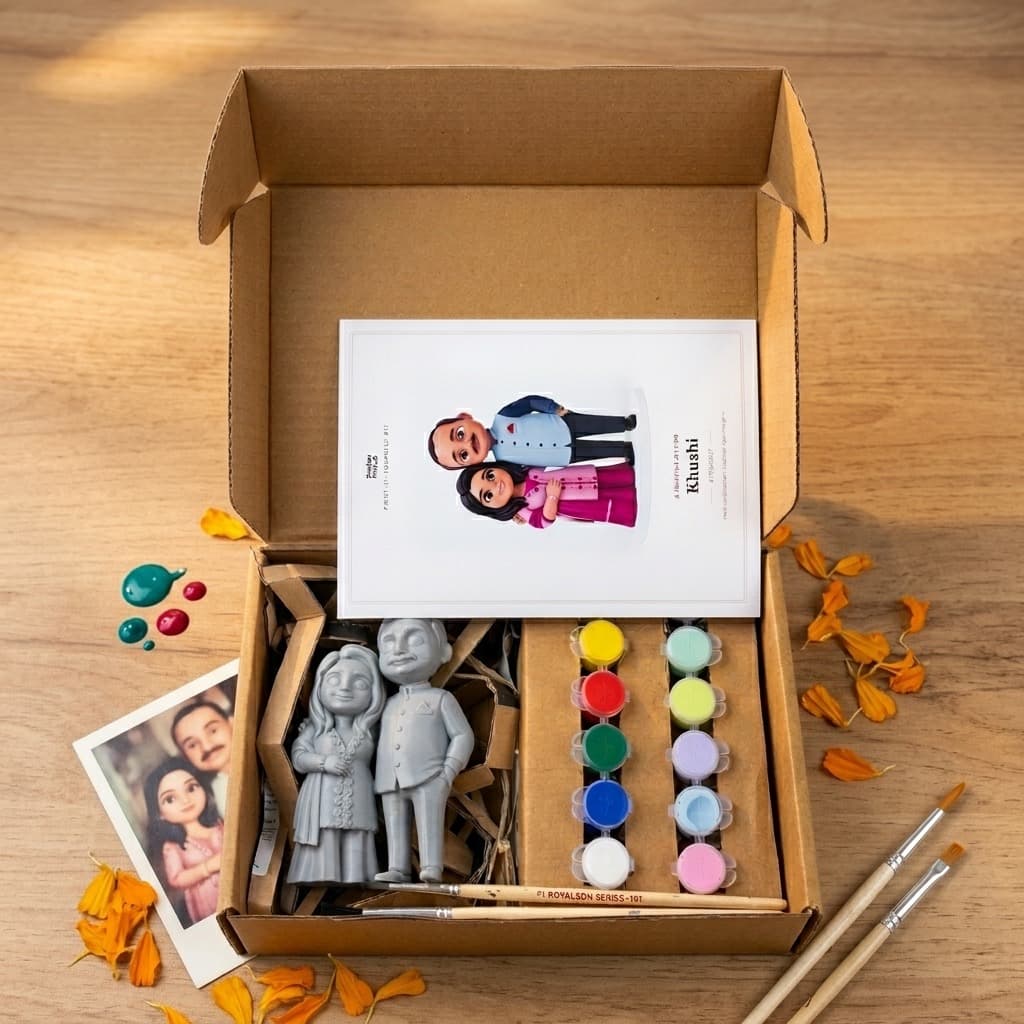
When people size up a beginner painting kit, they count the paint pots and check the colours against the reference photo. Nobody looks closely at the brushes, which is odd, because a bad brush can ruin an otherwise good kit faster than a bad paint colour ever will. Wrong paint is annoying. A brush that won't hold a point makes fine detail close to impossible no matter how patient you are.
A beginner kit should give you a small round brush, roughly a size 0 to 2, for eyes, lips, and any trim narrower than a few millimetres, plus a slightly bigger round or flat brush for skin, clothing, and anything covering real surface area. That's genuinely enough for one figure. A kit that only includes one brush is asking you to do detail work with a tip too fat for it, or cover large areas with a tip too thin, and both jobs suffer. If you're weighing a kit against buying supplies yourself, our full checklist for what a good kit should include covers this alongside paint volume and guide quality.
Natural sable brushes are lovely for watercolour and oil, and mostly wasted on acrylic. Acrylic dries fast into a hard plastic film, and repeated exposure is harder on natural hair than most other paint types, which is part of why a natural brush left uncleaned for even a short session can go stiff. A synthetic brush, usually labelled nylon or taklon, holds its shape better against that and costs a fraction of the price. If a kit's product listing brags about genuine sable brushes for an acrylic kit, that's a sign the person who wrote it doesn't paint much, not a real upgrade.
Wet the tip of the detail brush and press it lightly against your finger, then let it go. A decent brush snaps back to a clean point on its own. One that stays splayed or forked, even after a couple of tries, was never going to give you a sharp line no matter how careful you are. Also give both brushes a light tug at the base of the bristles: a few loose hairs on the first tug is normal, a clump coming away means the glue join was cheap and the brush will keep shedding into your paint.
One test, thirty seconds
Point test: wet, press, release, does it come back to a tip? Do this before you paint anything, not after you notice your lines look ragged halfway through a figure.
If the kit brushes pass the point test, leave them alone for your first figure. Buying a premium brush before you know your own hand tends to waste money on control you haven't built yet. Where an upgrade genuinely pays off is a second small detail brush once you're a few figures in, so a tired tip on the one you use for everything isn't quietly limiting your best work. A solid synthetic detail brush runs somewhere around ₹100–200 at any art supply store, which isn't a real expense against what a figure already cost you in time. Cleaning them properly between sessions does more for how long they last than what you paid for them in the first place.
Our own kits ship with two brushes sized this way, a detail round and a slightly bigger one for base coats, matched to the specific unpainted figurine and numbered guide in the box. It's one way to see the sizing above put into practice, not the only way to get it right, and the same two checks above are worth running on any kit before you sit down to paint.
No. A small detail round and a slightly bigger brush for base coats cover almost everything on a single figure. More brushes mostly just means more cleanup between colours, not better results.
Not for acrylic. Synthetic (nylon or taklon) brushes hold their shape better against fast-drying acrylic and cost far less. Natural hair brushes are better suited to watercolour or oil.
Very little. A good synthetic detail brush costs around ₹100–200, and that's the one brush worth spending on if a kit's included one fails the point test. Everything else can wait until you know what your own painting style needs.
Painting & Together-Time
A wrong colour or a smudged line on a half-painted figurine feels final. It almost never is. Here's how to actually rescue it.
4 min read
Painting & Together-Time
A kit gives you paint and brushes. Here's the short, cheap list of everyday things you'll also want on the table before you start.
4 min read
Painting & Together-Time
The parts nobody mentions beforehand: how long it really takes, what goes wrong halfway through, and why the crooked bits end up mattering.
4 min read